For many doctoral researchers, supervision is described as central to the PhD experience. Yet it remains one of the least explained, least theorised, and most unevenly lived aspects of doctoral study. This gap becomes particularly visible for mature PhD learners, who often enter doctoral programmes with established professional identities, leadership experience, and long histories of responsibility outside academia.
This reflection draws on the PhD Beyond 50 webinar, Making Supervision Work as a Mature PhD Student, which brought together speakers at different stages of the doctoral journey to explore supervision through three connected lenses: systems, self, and relationships. What emerged was not a set of universal answers, but a shared recognition of supervision as a dynamic, relational process that shapes confidence, agency, and persistence over time.
‘Understanding the Systems of Supervision’
The first session was presented by Dr Anna Molnár, Leverhulme Early Career Research Fellow at the ICMA Centre, Henley Business School, University of Reading. A major theme across the session was that supervision shapes the doctoral journey long before the thesis takes form. These reflections were framed as learning notes rather than prescriptions, drawn from lived experience, including decisions that worked well and responsibilities assumed too late.
Supervision is the first sustained encounter with academic culture for many mature learners. It is where expectations are clarified, norms are absorbed, and informal rules begin to operate. Choosing a supervisor, therefore, extends beyond subject expertise. Working style, availability, responsiveness, and operational understanding of the PhD process are equally significant. Informal conversations before full engagement often reveal more about long term fit than formal profiles.
Once convinced about the supervisor and enrolment formalised, the supervisory relationship sits within a wider institutional structure. Administrative staff, reporting cycles, milestone requirements, and submission processes form part of the doctoral infrastructure. Difficulties frequently arise not from intellectual disagreement but from assumed responsibility. Expecting supervisors to track deadlines, or assuming that paperwork will be handled elsewhere, can create avoidable strain. Familiarity and clarity with institutional requirements, independent deadline management, and written documentation of meetings were described as practical ways of strengthening the partnership.
Major milestones such as upgrade, submission, and viva preparation further expose this hidden architecture. Each involves procedural steps that require early awareness and proactive communication. Making these processes visible reduces uncertainty and restores a sense of agency.
For mature learners, uncertainty in supervision rarely reflects a lack of capability. Rather, it signals a misalignment between established professional experience and academic systems that often assume a novice trajectory. When supervision is understood as a structured, relational system, it becomes less opaque and more workable.
‘Taking Ownership of Your PhD Journey’
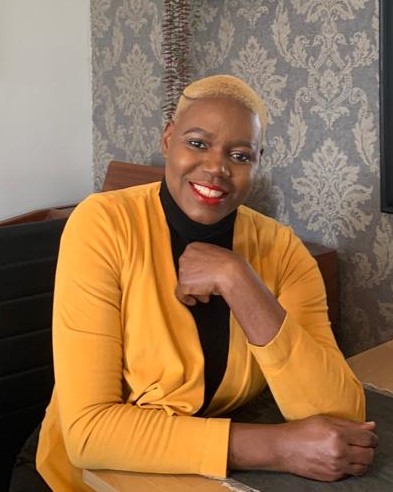
The second session, led by Dr Ifeoma Dan-Ogosi, Senior Lecturer in Public Health, University of the West of England, shifted from external supervisory systems to the internal work of ownership. Reflections were grounded in lived experience, including her early period of not taking responsibility for the direction of her PhD. Initial expectations that supervisors would lead the process created frustration and tension, and became a turning point. Moving into the driving seat required recognising that while supervisors guide, the doctorate ultimately belongs to the candidate.
As a mature learner, this shift is emotionally complex. Accustomed to professional protocol, many may find themselves waiting for instruction or approval, however taking full ownership from the beginning is crucial to success in the journey. Ownership, however, was framed not as immediate independence but as gradual development. A PhD is dynamic. Topics evolve, feasibility changes, and even core ideas may need to be abandoned. Adaptation is very necessary and it is part of the doctoral learning.
Taking ownership involved deep engagement with methodology, philosophy, and intellectual positioning, not simply methods. It required understanding and defending choices with clarity. It also meant setting boundaries, managing scope, and learning to say no when necessary. Without boundaries, projects expand and overwhelm.
Practical strategies reinforced this shift. Treating the PhD as structured project work, planning time intentionally, preparing agendas for meetings, documenting decisions, writing regularly, and seeking feedback proactively all signalled movement into intellectual authority. Feedback, though often emotionally challenging, was reframed as developmental rather than evaluative.
Ownership was further sustained through support networks beyond supervision, reflective documentation, and intentional self care. Curiosity emerged as the steady force beneath the process, enabling resilience and intellectual growth.
Ownership, then, was not isolation. It was purposeful engagement with responsibility, learning, boundaries, and community.
‘Managing the Supervision Relationship as a Mature Learner’
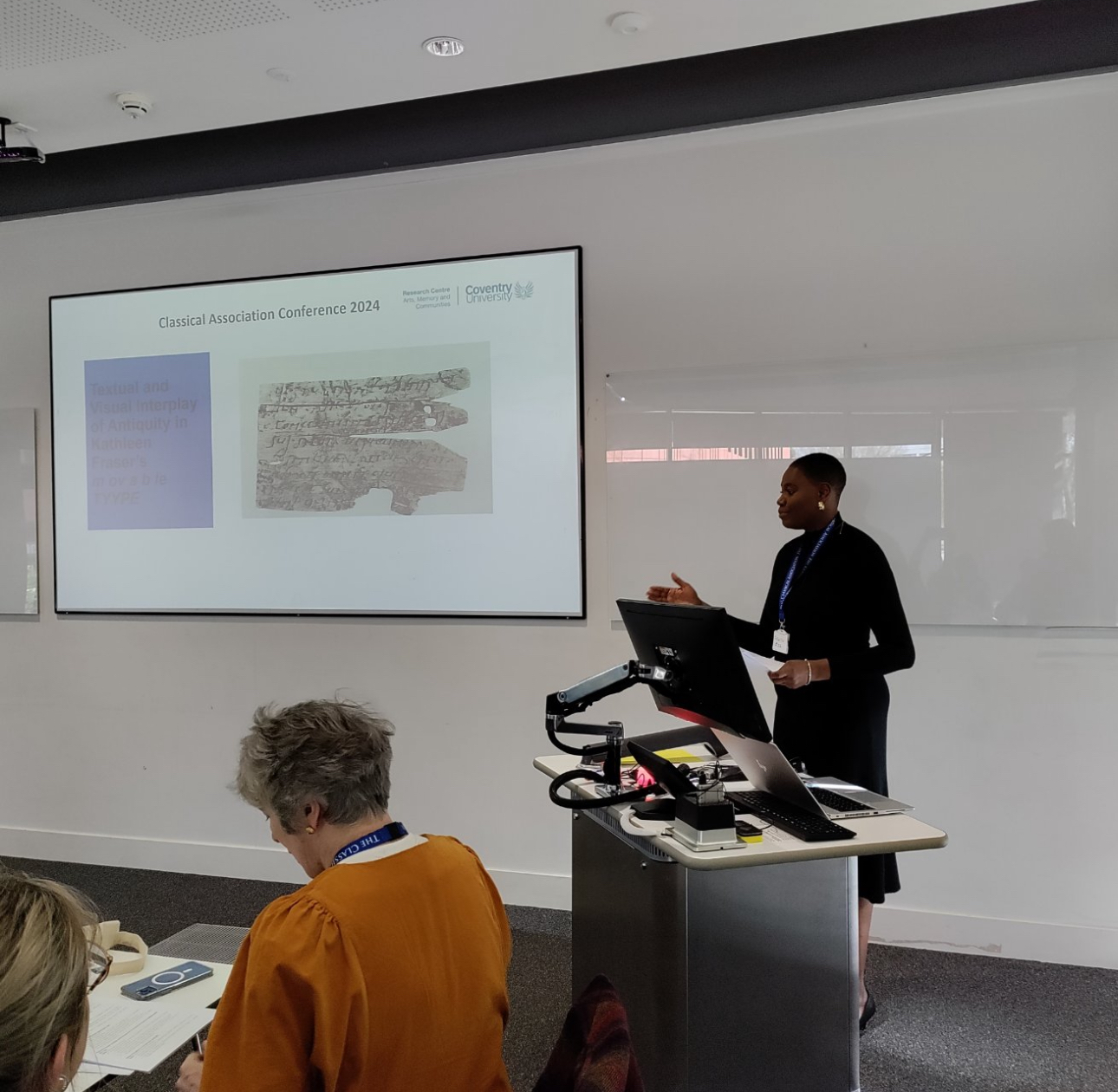
The third session delivered by Bishop Bob Francis, Final-Year PGR, Coventry University, introduced some of the most nuanced discussions centred on supervision as a relational and political space shaped by age, culture, discipline, institutional norms, and assumptions about motivation. For mature doctoral researchers, supervisory relationships are rarely neutral. They are layered with prior identities, professional histories, and unspoken expectations.
Entering academia with established leadership experience can produce subtle reversals of authority. Candidates may be older than their supervisors, have led organisations, or hold public roles, yet occupy a position of formal academic dependence. Identity does not disappear at enrolment; it continues to shape interaction.
Clarity of motivation emerged as foundational. When supervisors assume traditional academic career trajectories with mature learners without an understanding of the student’s background, misalignment can arise for those pursuing doctoral study for institutional, professional, or community leadership reasons and this can create tension. As the student, being internally clear about why the PhD is being undertaken in the first place becomes an anchor during periods of tension or misunderstanding.
Multidisciplinary research intensified these dynamics. Multiple supervisors with differing epistemological commitments can pull a project in competing directions. Meetings may become sites of disciplinary negotiation rather than straightforward guidance. Over time, however, a critical shift occurs, where the candidate becomes the emerging expert in the specific niche of study. Supervisors advise, but the thesis belongs to the researcher.
Cultural dynamics further complicate supervision. Ambition may be misread as arrogance. Respect may be interpreted as passivity. Questions may be perceived as challenge. Misunderstandings often arise not from intellectual disagreement but from unspoken cultural assumptions. Learning to name these dynamics, rather than internalise them as personal inadequacy, becomes a key developmental skill.
Feedback, in this context, was reframed as dialogue rather than control. It requires evaluation, reflection, and sometimes reasoned defence. Ownership includes the confidence to engage critically, without hostility, and to hold intellectual ground when necessary.
Across the discussion, one phrase captured the collective insight, and that is, the PhD takes a village. Supervisors matter deeply, but so do peers, mentors, family, and cross disciplinary communities. For mature learners in particular, these broader networks are sustaining structures.
Supervision, then, is a negotiated relationship shaped by identity, culture, power, and evolving expertise. Learning to manage that complexity is part of becoming a scholar.
Writing, confidence, and learning the academic voice
Academic writing emerged as a shared site of vulnerability, particularly for those returning to study after long professional careers. Initial feedback at the early stages of the journey was often described as destabilising, especially when writing was framed as “not at doctoral level” without clear explanation.
The discussion reframed academic writing beyond just being a measure of intelligence or language fluency, but as a learned scholarly practice. For mature learners, recognising writing as a skill to be acquired, rather than a personal shortcoming, was deeply liberating. Support often comes within the school system that provides workshops on academic writing.
Support networks beyond supervision
Another strong theme was the importance of support beyond the supervisory relationship. Peer writing groups, mentors, administrative staff, professional communities, and informal networks all played vital roles in sustaining momentum.
The repeated phrase “it takes a village” captured the collective nature of doctoral persistence. Supervision alone was rarely sufficient. Progress depended on a wider web of relationships that provided intellectual, emotional, and practical support.
Psychological safety and shared spaces
Participants repeatedly emphasised the value of the webinar’s conversational, non-recorded format. The absence of surveillance created psychological safety, allowing honest discussion of challenges without fear of judgement or reputational risk.
This highlighted the need for spaces where doctoral researchers can speak openly about supervision, power, and uncertainty. Such spaces do not undermine academic standards. They strengthen them by fostering reflection, clarity, and resilience.
Concluding reflections
In all, these discussions challenge simplified narratives of doctoral success. They suggest that supervision goes far beyond being merely a technical arrangement, and is a relational process that shapes identity, confidence, and persistence, particularly for mature learners.
Rather than viewing mature doctoral researchers as needing to fit existing models, these reflections point to the value of rethinking doctoral support in ways that recognise professional experience, relational complexity, and the realities of later life learning.
When supervision is made visible and thoughtfully engaged, it can become a site of growth.
I hope this helps you find some clarity as it relates to supervision in your PhD journey.
As always, I am rooting for you.
Your mature PhD supporter,
Adeola Eze