Recently, I shared my academic CV with one of my supervisors for review as I began thinking more seriously about securing a job after the PhD.
The first line of their response excited me:
“Wow, you’ve been busy, and this is a really strong and competitive CV.”
I found that deeply encouraging because it took me back to a very different moment during the first few months of my PhD.
A colleague who had joined the doctoral programme a few months before me then was telling me about applying for membership of the Royal Historical Society.
“You need to upload your academic CV as part of the application,” she explained.
Academic CV?
I had spent more than two decades working in education. My professional CV was full of teaching, leadership, publishing, programme development and achievements from a long and established career.
So I opened a new document and began trying to create an academic CV.
Beyond my first degree, my master’s degree and the studentship I had received to begin my PhD, I had almost nothing else to include.
No conference presentations.
No academic publications.
No higher education teaching experience.
No scholarly events, research networks or academic service.
I realised I did not have an academic CV, yet, and that unsettled me.
I had entered the PhD with years of knowledge, leadership experience and a strong professional identity. Yet very little of that experience appeared within the categories through which academic achievement was recognised.
Looking back, I can see that this was one of the moments that changed how I approached my PhD.
Completing the thesis had to remain central, but I also needed to prepare for the future I hoped the PhD would make possible. One of my reasons for pursuing a doctorate was to teach in higher education as a specialist in my field. Having that ambition was one thing. Building the experience that could strengthen my chances of achieving it was another.
As mature learners, many of us begin doctoral study with years of professional experience behind us. Our professional CVs may already be full. Then we enter academia and discover that the academic CV tells a different story.
A Professional CV Is Not an Academic CV
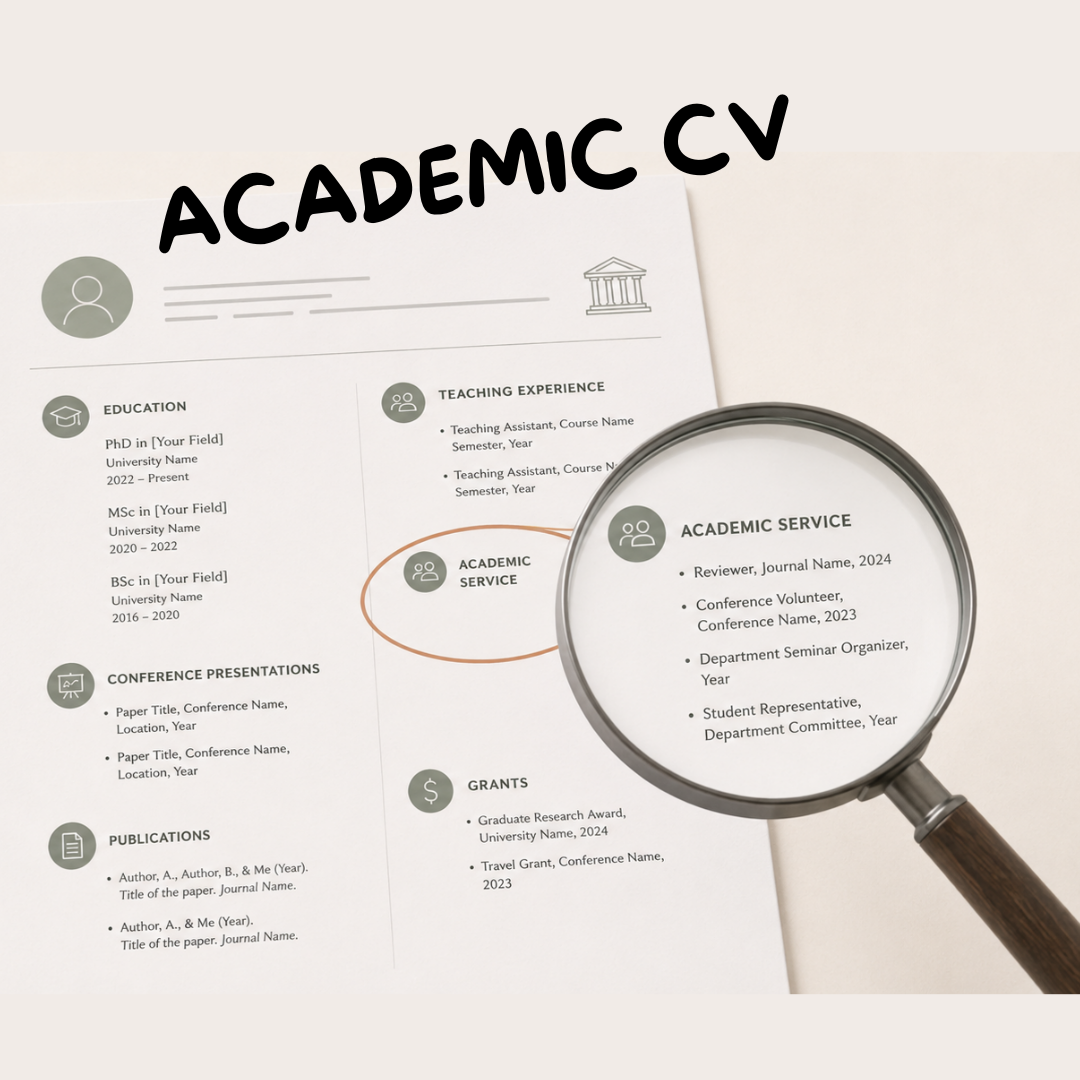
A professional CV usually records employment, leadership, responsibilities, achievements and practical skills. An academic CV asks different questions.
What have you researched?
Where have you presented or published your work?
What have you taught?
How have you contributed to academic communities?
The difference was not that my previous experience had suddenly lost its value. An academic CV simply required a different kind of evidence. I had to learn how to connect the educator and professional I had already become with the researcher, university teacher and scholar I was developing into.
Here Is What I Did to Build My Academic CV
Once I recognised the gap, I began building my academic CV alongside the thesis. I looked at the kinds of evidence academic roles commonly required and identified experiences that connected with the future I hoped to pursue.
Believe me when I say that this can be difficult as a mature learner. You may already be carrying family responsibilities, working to earn a living or trying to support your household while completing the PhD. Building an academic profile requires additional time, energy and effort alongside a thesis that is already demanding so much from you. It therefore requires intentionality.
It also requires an early start because many of these experiences take time to develop. Publications can take months or even years. Conference abstracts are often submitted long before the event itself. Teaching opportunities and academic relationships also grow gradually. The earlier I began, the more time I gave these different parts of my academic profile to develop.
Here are some of the steps I took to start getting ready for my Post-PhD Life.
I Began Presenting My Research Early
During my first year, I applied to present different aspects of my developing research at conferences and seminars. This helped me clarify my ideas, locate my work within wider academic conversations and gradually build visibility within my fields.
In 2024, I presented a paper on Carolee Schneemann’s Interior Scroll at the Oxford and Royal Holloway Postgraduate Symposium on Ancient Performance and its Reception. Almost two years later, a researcher who had heard the presentation contacted me because she remembered the paper and wanted to cite it in her own work. This tells me that presenting research can have a life beyond the conference room.
I Looked for Opportunities to Publish
I began paying closer attention to calls for journal articles, book chapters, reviews and conference proceedings connected with my research to be able to have some publications during my PhD. Some publications grew from papers I had first presented at conferences. The publication process also taught me resilience because there were times when reviewers’ comments felt overwhelming, or I sometimes worried that the requested revisions would take the work too far from my original argument. But I kept at it and stayed with the process and learnt to treat feedback as an opportunity to strengthen my thinking. My academic CV could now show that I was able to develop an idea, respond thoughtfully to critique and carry a piece of scholarship through to publication.
I Gained Experience of Teaching in Higher Education
Because teaching at university level was one of my goals, I approached a former module leader from my master’s programme and asked whether I could contribute to teaching. This opened valuable opportunities for me to teach at both undergraduate and postgraduate levels. Those early unpaid opportunities allowed me to lead seminars and later brought introductions to other module leaders working in literature and creative writing. A colleague also connected me with a module leader looking for active researchers to share their work and research methods with students. This gave me the opportunity to discuss my research and explain how I used discourse analysis within my textual study. Over time, I contributed to seminars and guest lectures across literature, Shakespeare, creative writing, film and interdisciplinary humanities. I also completed intensive training in teaching and learning in higher education, helping me carry my previous teaching expertise into a university setting.
I Became Connected to Academic Communities
Joining organisations such as the Royal Historical Society, the Classical Association and the Society for the Promotion of Hellenic Studies connected me with wider academic communities around my research. Through their mailing lists and events, I became aware of publication opportunities, conferences, workshops, funding calls and scholarly conversations. They also helped me identify and successfully apply for scholarships, bursaries and research grants that supported my academic development. Relationships developed through conferences, seminars and university communities also led to teaching opportunities, invitations, collaborations and continued engagement with my research.
I Helped Organise Academic Events
For two consecutive years, I co-convened the HistoryLab Annual Conference at the Institute of Historical Research, School of Advanced Study, University of London. I contributed to the development of themes, calls for papers, speaker arrangements and conference delivery. I later conceived, organised and chaired an interdisciplinary research seminar at ArCC, my research centre at Coventry University, exploring how my research connected with wider questions of digital preservation, cultural memory and long term knowledge transmission.
With these, I now have evidence of academic service and leadership, which also help me understand the largely unseen work involved in creating meaningful scholarly conversations.
I Created Opportunities through Academic Leadership
Now, through the network I founded, PhD for Mature Learners, I have organised sessions, brought researchers together and established an Advisory Circle. This developed another part of my academic profile through leadership, public engagement and community development. It also allowed me to create spaces in which mature researchers could share knowledge, build relationships and receive support.
Choosing Opportunities Purposefully
Building an academic CV also required discernment.
My time was already shared among research, family and other responsibilities. I had to choose opportunities that developed my research, strengthened my teaching or publication experience, connected me with my fields or supported the kind of work I hoped to pursue.
Looking again at the CV my supervisor described as strong and competitive, I see more than a list of achievements. I see research carried into classrooms, conferences, publications and academic communities.
Although I began with the practical need to build an academic CV, the value of this work has extended far beyond adding lines to a document. The CV records this journey, but its deeper value lies in the relationships, confidence, impact and developing academic identity that have emerged from it. For an academic recruiter, it offers evidence of both what I have done and how I could contribute to research, teaching and the wider life of a university.
As I approach the end of the PhD, I am still considering where the journey will take me next. But I move towards that future with more than a thesis. I now have evidence of the researcher, teacher and academic I have been intentionally becoming.
I have shared quite openly how this part of my journey has unfolded and how I have been intentionally preparing for a possible future in academia.
I do not have the academic job yet. But I now have a growing record of research, teaching, publications, presentations, leadership and service that may help strengthen my chances when the right opportunity comes.
For anyone just beginning the PhD and considering a future in academia, it may be worth thinking about that future early as well. Begin gradually. Look for experiences that support the direction you hope to take. You might want to allow your academic profile to grow alongside the thesis, and not just focus on the thesis alone.
And for those already on the journey, you’ve got this.
Rooting for you all, as always.
Your Mature PhD Supporter
Adeola Eze