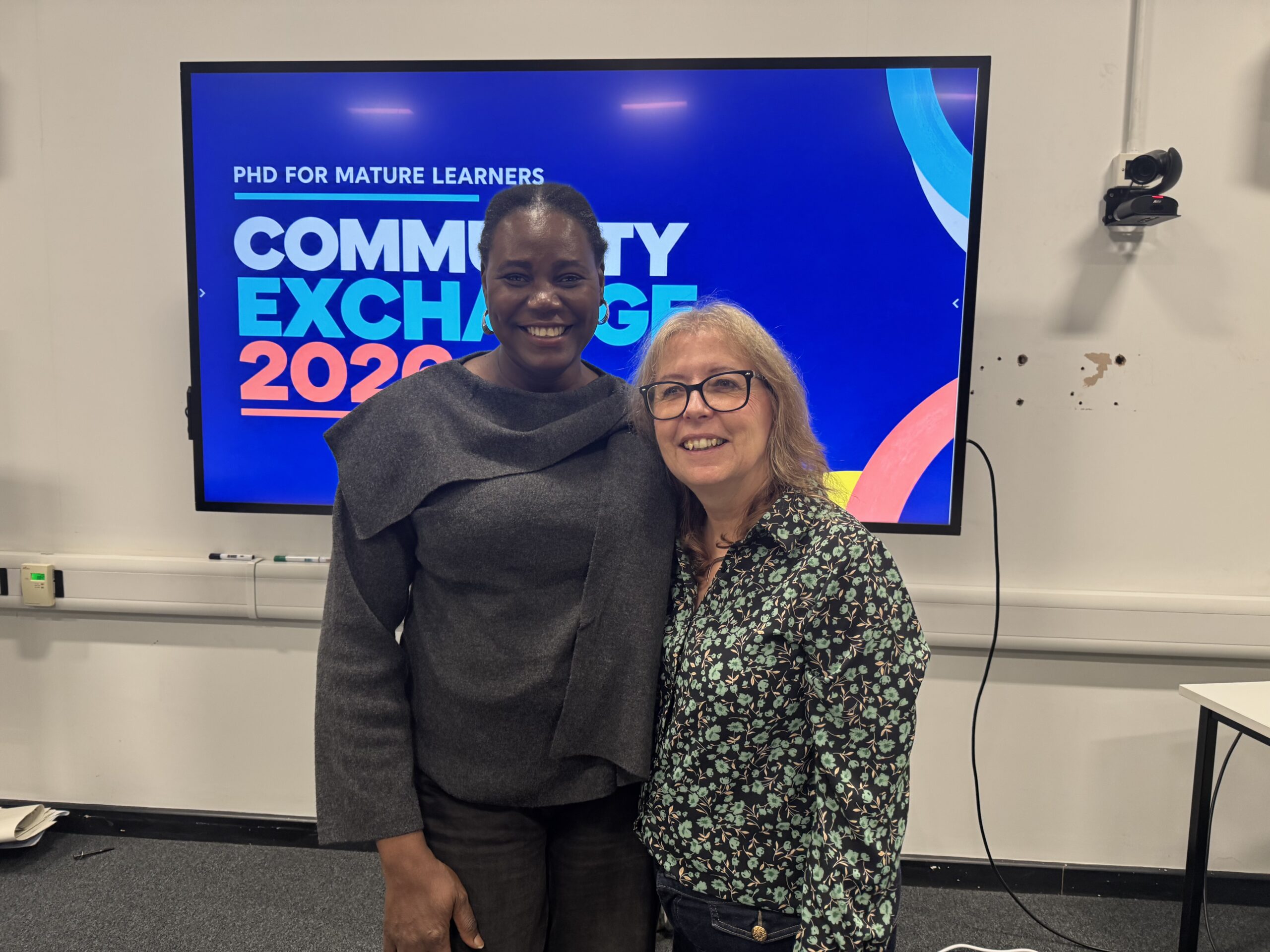
We held our inaugural PhD for Mature Learners Community Exchange at Coventry University on 29 October, after months of planning, and it was such a joy to finally meet other mature doctoral researchers in person and spend the day together.
One of the things I have kept thinking about since then is how many people said they wished they had found a community like this when they began.
And I found myself wondering, if so many of us had wanted this, how long had we each been carrying that feeling?
I remember it very well. In 2024, I attended a session on writing blogs during a PhD, advertised by the Doctoral College at Coventry University. Afterwards, I wondered what I could write about. There were plenty of PhD blogs, but I had wanted something more relatable to my experience of returning to academia at 50.
Much more, I wanted a community. I wanted to know how others were finding their way through it. Were they having some of the same difficulties? What was helping them? How could my experience help support another?
I spoke to my second daughter about it at home. Did she think writing about this would make sense? Would anyone else be interested? She encouraged me to do it if it was something affecting me and tugging at my heart.
That first post went out on 4 March 2025. Since then, I have tried to publish every month (I must confess I have not always managed it, because some months, the PhD would just refuse to give me a breather, but hey, I am writing this one!). Also, we have had two well-attended webinars and went on to begin our monthly meetups. Our LinkedIn community has now grown to more than 140 people. A growing community.
Then, on 29 October, we finally met in person at Coventry University.
More than thirty people attended from around the UK, and what lively conversations we had! I recall vividly how much difficulty I had getting everyone’s attention to give my welcome at the beginning of the day. During “Spill the Tea”, the conversations became so engaging again, and they continued throughout the day whenever we had a moment to just talk! That is one of the things I appreciate most, and it came through in the discussions and afterwards in the feedback. People had found others who understood something of their lives and were so glad to be spending the day together. One note from our Moving Tables session simply said, “I am not alone.” Connection!
I must say, I felt deeply proud that I had followed that nudge back then. Creating a community of people who feel connected through their lived experiences, even though their studies are so different, is something I am truly glad to have been part of.
Listening to our keynote speaker, Dr Helen Thomas-Hughes from the University of Bristol, helped me understand why those conversations mattered so much. Her research showed how different our circumstances can be, even when we are all described as “mature” doctoral researchers, and why universities need to take those differences into account. I found that really encouraging. We had begun from the heart, responding to something we felt was needed, and here was research helping us understand that need more clearly. Considering how lonely the PhD journey can feel, finding your ‘tribe’ can make a huge difference.
I think about how Linda Marchant, my friend and colleague, and I met at one of our centre’s work-in-progress sessions. We began talking and connected and have met over coffee a number of times since then. That connection has helped in no small way as we have worked together to build this community.
Now, after the Community Exchange, we are arranging to meet again to reflect on how it went and discuss what comes next. Linda suggested bringing sandwiches. Hopefully, we will find some sunshine in this November cold! You bet I am looking forward to that as one of the highlights of my week, and a little break from thinking about the fast-approaching ‘almighty viva’ is very much needed!
I share this because the person you get talking to after a university session could become someone you continue to meet and support along the way. When Linda and I first met, I could not have known how much we would eventually do together.
So, this month, I want to share a few thoughts about finding that connection for yourself.
Allow yourself to want the company
By the time we begin a PhD later in life, many of us have spent years being the person others come to for support. We are used to getting on with things.
You can still want someone to talk to about your own journey. Having professional experience does not mean you will automatically know how to find your way around doctoral study.
If you have been missing that company, take the feeling seriously. It is worth making room for, even when your week already feels so busy.
Reach out to one person
Think of a fellow researcher you have spoken to before, perhaps after a seminar or during an induction session. Send them a message: “How is your research going? Would you like to meet for a coffee sometime? It would be good to catch up.”
You do not have to wait until you are struggling or have a research question to discuss. Wanting to spend time with someone who is also doing a PhD is enough reason to reach out.
Look beyond your research centre
The person you connect with may have little knowledge of your subject. They may be in another faculty or at another university entirely.
Yet they might understand what it means to return to study after years away, or why you cannot always stay for an evening event.
Try a university session outside your usual circle, or join a mature researcher meetup. Give yourself an opportunity to meet someone whose circumstances you recognise. Research interests give us one reason to connect, but shared experiences can give us another.
Take part, even if you begin quietly
It can feel awkward entering a group where you do not know anyone. You may prefer to listen at first, and I think that is actually okay.
When someone says something familiar, perhaps tell them afterwards, “I have been finding that difficult too.” Ask how they have been managing it.
We all recognise how much harder a PhD can be when you feel alone. So, taking a step towards building connections is worthwhile. Getting connected does involve making yourself available for a conversation, so you can try to do that at your own pace.
Make something regular of the connection
If you meet someone you get on with, suggest meeting again, and even use that to build some productive work together.
You could arrange a weekly or monthly writing session together, working on your separate projects and checking in afterwards. You can encourage each other towards completion without being experts in each other’s research.
And sometimes, share a sandwich together. Talk about what is currently difficult or something you are pleased to have achieved. It helps to have someone who knows how much that small milestone meant to you.
While we can take these steps ourselves, universities also have a part to play in making that connection easier. Dr Helen and Dr Alice Beck (Bristol) reported that participants in their research often felt their professional experience was undervalued, with implications for their sense of belonging (HEPI). For me, this is a reminder that belonging also involves feeling that what you bring is recognised and valued.
Alongside that recognition, universities can create opportunities for mature doctoral researchers to meet, supporting peer networks from induction and planning activities around working and caring commitments. I will be sharing more about the suggestions from our Community Exchange and how these could inform a framework for institutions to better support mature doctoral researchers.
When I think about that note, “I am not alone”, I am reminded of why I wanted this community in the first place. It means a great deal to know there is someone you can talk to who understands something of what you are going through.
If you were at the Community Exchange, have you reached out to someone you met that day? If you have not, today is a good day to do so.
And if you were not there, perhaps there is someone in your own research community you have been meaning to catch up with. Why not send them a message? Give it a chance.
Linda and I began by talking after a work-in-progress session. Now, I am looking forward to our sandwiches and a catch-up this week. I hope you find someone whose company you can look forward to on this journey as well.
Always rooting for you,
Your Mature PhD
Adeola Eze
Leave a Reply